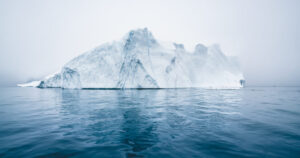
Three of the world’s most iconic cities could be submerged if Antarctica’s so-called “Doomsday Glacier” collapses, and scientists say that scenario is becoming more likely.
Climate change has long been linked to rising sea levels, warmer global temperatures, and extreme weather events. But new research on the Thwaites Glacier (ominously dubbed the “Doomsday Glacier”) is putting the potential consequences into sharper, more alarming focus, BBC Science Focus details.
Thwaites Glacier, located in West Antarctica, holds enough frozen water to raise global sea levels by more than two feet. But scientists warn that if it fully collapses, it could trigger a chain reaction affecting the much larger Antarctic ice sheet. The result? A staggering sea level rise of up to 10 feet, enough to drown major global cities like London, New York, and Bangkok.
These urban centres, home to millions and popular with tourists from around the world, would be among the first to face catastrophic flooding in such a scenario.
Researchers have been monitoring Thwaites closely through the International Thwaites Glacier Collaboration (ITGC), which launched in 2018 to study the glacier’s stability. What they’ve found is deeply concerning: the glacier is riddled with so-called “hidden lakes” beneath its surface, which may be playing a far greater role in its potential collapse than previously thought.
Have you heard about the Thwaites Glacier, aka the Doomsday Glacier?
It’s melting rapidly, and scientists are warning that its collapse could mean global flooding and disaster.
Here's what's happening and how supply chains can adapt: pic.twitter.com/LR3iD7kbxn
— Glenn Koepke (@LogTech1999) December 23, 2024
In March 2025, a study led by Professor Noel Gourmelen, a member of the ITGC, confirmed these subglacial lakes are significantly accelerating ice loss.
“We expected that water draining from the underside of the ice sheet plays a role in modulating ocean melting,” Gourmelen explained. “The sheer magnitude of this lake drainage gave us the opportunity to finally observe and quantify its impact.
“The lake outflow took place in a key sector impacting Thwaites’ stability. The drainage in effect momentarily turbo-charged Thwaites’ ocean-driven retreat.”
That “turbo charge” comes at a time when the Southern Hemisphere is already experiencing higher-than-expected temperatures in 2025, a worrying sign that the glacier could be melting faster than anticipated.
Dr. Alastair Graham, a marine geologist at the University of South Florida and also part of the ITGC, told News.com.au: “If Thwaites Glacier collapses, it would cause a rise of around 65cm (25 inches) in sea level.
“This year is really different. It’s very difficult to recover from this in one season. The game has changed.”
While the full collapse of the glacier may still be decades (or even centuries) away, the latest data shows the tipping point could arrive far sooner than scientists had hoped. And if it does, the world’s coastlines, economies, and millions of lives could be irreversibly altered.