For millions of television viewers, Patrick Duffy will always be connected to one of the most recognizable families in television history.
Born on March 17, 1949, in Townsend, Montana, Duffy originally had ambitions that went far beyond becoming a television star. He studied at the University of Washington and developed an interest in acting and theater before eventually making his way into professional entertainment.
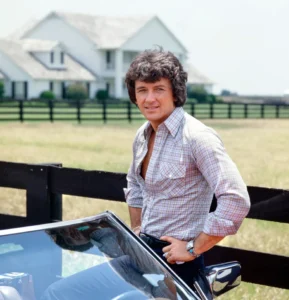
His big breakthrough came when he was cast as Bobby Ewing on the legendary television drama Dallas. The series became one of the defining shows of the late 1970s and 1980s, following the complicated lives, relationships, rivalries, and business battles of the wealthy Ewing family.
Duffy’s Bobby Ewing was very different from some of the other characters on the show. While the series was filled with betrayals, arguments, ambition, and family conflict, Bobby was often portrayed as the more compassionate and reasonable member of the Ewing family.
That made him one of the show’s most beloved characters.
Patrick Duffy became a familiar face in American homes as Dallas grew into a massive television phenomenon. Viewers followed Bobby’s relationships, his family struggles, and his attempts to keep peace while surrounded by constant drama.
Then came one of the most famous television twists of the era.
After Duffy temporarily left Dallas, the writers came up with an extraordinary explanation for his absence. Bobby was apparently killed, leaving viewers shocked.
But the story didn’t end there.

At the beginning of a later season, Bobby appeared alive in the shower, revealing that the entire previous season had supposedly been a dream.
The famous “Who shot J.R.?” mystery had already become one of television’s biggest cultural moments, and the Bobby Ewing dream storyline became another unforgettable example of how far a hit television series could go to surprise its audience.
After his time on Dallas, Duffy continued building a successful career in television.
Another major chapter came with the sitcom Step by Step, where he played Frank Lambert, a father raising three children who marries a woman with three children of her own. The series became a popular family sitcom during the 1990s.
For a generation of viewers, Duffy was once again playing the familiar role of a father trying to keep a complicated household together.
His career has never been limited to one famous character. Over the years, he has appeared in television programs, movies, stage productions, and other projects, continuing to work long after his biggest shows had ended.
What makes Patrick Duffy particularly memorable is the way his career has crossed several generations.
Older viewers remember him as Bobby Ewing.
Many 1990s viewers remember him as Frank Lambert.
And younger viewers may recognize him from later appearances without realizing they are watching the same actor who became one of television’s biggest stars decades earlier.
Today, Patrick Duffy remains active in entertainment and continues to make appearances on television and in other projects.
He may look different from the young actor audiences first saw on their screens, but his connection to classic American television remains incredibly strong.
For viewers who watched Dallas when it originally aired, seeing Patrick Duffy again can bring back memories of sitting in front of the television every week, waiting to find out what would happen next to the Ewing family.
Television has changed dramatically since those days.
There are now countless channels, streaming services, and thousands of shows available at any moment.
But for many people who grew up during the era of Dallas and classic sitcoms, television felt different.
You didn’t simply watch an episode whenever you wanted.
You waited for it.
You talked about it with friends and family.
And sometimes, the entire country seemed to be talking about the same characters the next morning.
Patrick Duffy was one of the actors at the center of that era.
Decades later, Bobby Ewing remains one of his most recognizable roles — and for millions of fans, Pat