An AI-generated prediction about who might become the next U.S. president after Donald Trump completes his second term in 2029 is drawing attention—and a fair amount of debate.
At this stage, with several years still ahead in the current administration, any forecast is naturally speculative. Political landscapes shift quickly, and public sentiment can change in response to events that are impossible to fully anticipate. Still, interest in the 2028 election is already building, especially given how polarized the current climate remains.
The projection comes from a simulation shared by the I Ask AI, which analyzed trends in polling, political positioning, and historical behavior to outline possible outcomes. While not definitive, the model attempts to highlight likely scenarios based on current trajectories.
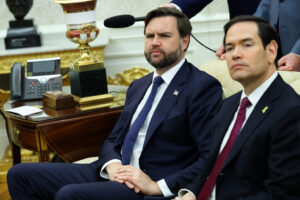
On the Republican side, the simulation suggests a potential contest between JD Vance and Marco Rubio. According to the model, the distinction between their roles could become a defining factor.
Vance, as vice president, is closely tied to the administration’s domestic policies and public perception. That proximity may be both an advantage and a liability. If the administration is viewed favorably, he could benefit from continuity. If not, the same closeness could make it harder for him to distance himself from criticism.
Rubio, on the other hand, may have more room to position himself differently. As Secretary of State, his focus on foreign policy could allow him to argue that he was not directly involved in domestic controversies. The AI model suggests that this separation might appeal to voters seeking experience without full association.
Even so, the projection still places Vance slightly ahead at this stage. The reasoning is relatively straightforward: incumbency influence and visibility often matter in primary contests. Rubio’s path, according to the model, may depend less on his own momentum and more on whether Vance encounters political setbacks.
One particularly interesting element of the prediction involves Trump’s continued influence. The simulation assumes that his endorsement could play a decisive role. If he were to shift support from one candidate to another, it could significantly reshape the primary race—reflecting the strong alignment many Republican voters still have with his leadership.
However, the model also outlines an alternative scenario. If Trump’s approval were to decline over time, it could affect those most closely associated with him—particularly Vance. In that case, Rubio might gain ground as a candidate perceived as more adaptable or less directly tied to controversial decisions.
On the Democratic side, the projection identifies Gavin Newsom as a leading contender for the nomination. The model suggests that he could emerge as a unifying figure within his party, ultimately facing the Republican nominee in a closely contested general election.
In its most direct conclusion, the AI predicts a narrow victory for Newsom. The reasoning centers on what it describes as voter “exhaustion”—a broader desire among the electorate for change after years of political tension. According to the model, that sentiment could outweigh other factors in a tight race.
That said, predictions like this should be treated cautiously. AI simulations rely on existing data and patterns, but elections are shaped by real-time events, candidate decisions, economic conditions, and unexpected developments. What seems plausible today may look very different closer to 2028.
In the end, the projection is less a definitive answer and more a snapshot of current possibilities. It highlights the key figures, the dynamics at play, and the uncertainties that still define the road ahead.
And with several years remaining before voters head to the polls, one thing remains clear: the outcome is far from settled.