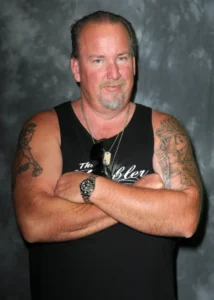
For years, viewers knew Darrell Sheets as the swaggering risk-taker of Storage Wars—the bidder who walked into auctions like he expected to win and often did. On screen, he was loud, fearless, and larger than life, the kind of reality TV presence built for memorable lines and big reveals. But the story that has emerged after his death is far more painful and far more human. Darrell Sheets, 67, was found dead at his home in Lake Havasu City, Arizona, on April 22. Police have said he appeared to have died from a self-inflicted gunshot wound, and the investigation remains active. Authorities have also said they are aware of allegations of cyberbullying and are looking into them as part of that investigation.
That contrast—between the man fans thought they knew and the reality he may have been living—is what makes this loss hit differently. Darrell built his television identity around confidence. On Storage Wars, he was “The Gambler,” a buyer driven by instinct, adrenaline, and the promise of turning a storage locker into a life-changing payday. A&E’s long-running series helped make him one of the show’s most recognizable figures, and by the end of his run, he had appeared in 163 episodes. He became a favorite not just because he won, but because he made every risk look personal.
But behind that bravado, Darrell had been facing serious health struggles for years. In 2019, he shared publicly that he had suffered two heart attacks and needed emergency treatment, including stents after major blockages were discovered. He wrote candidly about how much the ordeal had changed him, saying he was living with severely reduced heart function, attached to a machine around the clock, and taking dozens of pills a day. He also admitted that he had neglected warning signs in his health and was now paying the price. A year later, he marked the anniversary of surviving that crisis with gratitude, acknowledging just how difficult that fight had been.
Those posts are hard to revisit now, because they reveal a man who already understood what it meant to live close to fear. They also show someone trying to turn his own suffering into a warning for others. And that wasn’t limited to physical health. In one social media post from 2019, Sheets urged people to check in on one another and spoke about how quickly unseen pain can become deadly. That message feels especially heartbreaking now, because it suggests he had thought deeply about how invisible suffering can be.
Some of the most emotional reflections have come from people who knew him beyond the show’s rivalry and editing. Former co-star René Nezhoda said in an Instagram video that while fans often assumed they hated each other because of their on-screen competition, the reality was more complicated and far more personal. He described Sheets as a hardworking man who cared deeply about his family and said they were friends beneath the competitive tension. Nezhoda also alleged that Sheets had recently been tormented by severe cyberbullying and urged law enforcement to look closely at it. Those claims have not been independently proven, but police have confirmed they are examining the all
That is what makes this story so uncomfortable. It asks people to confront how easy it is to confuse a public image with a whole person. Darrell Sheets looked invincible to many viewers. He seemed built for conflict, unbothered by pressure, the kind of man who could turn chaos into profit and insult into entertainment. But reality television only shows what it is designed to show. It rarely reveals the private weight someone carries after the cameras stop. As Nezhoda put it, watching someone on television does not mean you know them, and it certainly does not entitle anyone to torment them.
In the end, the picture left behind is fuller and sadder than the one audiences were given each week. Darrell Sheets was not only a reality star. He was also a father, a man who survived major medical trauma, someone who spoke openly about checking on others, and—if the accounts now being shared are any indication—someone who may have been carrying far more pain than most people ever saw. That does not change the image fans remember, but it does deepen it. And maybe that is the part worth holding onto: not just the swagger, not just the nickname, but the reminder that the people who look toughest from a distance may still be fighting battles no one else can hear.
If you or someone you know may be thinking about suicide or is in emotional distress, call or text 988 in the U.S. and Canada for the Suicide & Crisis Lifeline. If you are elsewhere, contact local emergency services or a crisis hotline in your country right away.