New Filings Complicate the Case Against Charlie Kirk Murder Suspect
In a case already charged with grief, politics, and public attention, new court filings are introducing a deeper layer of uncertainty. The central question is no longer only what prosecutors believe happened on the day Charlie Kirk was killed, but whether some of the most important forensic evidence will ultimately support that case as clearly as first assumed. In any murder prosecution, especially one carrying the possibility of the death penalty, that distinction matters enormously. Allegations may shape headlines, but courts are tasked with something more demanding: proving claims with evidence that can withstand scrutiny.
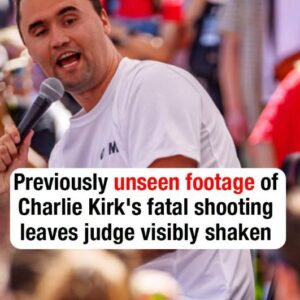
Tyler Robinson, 22, is charged with aggravated murder in the September 10, 2025, shooting of Kirk at Utah Valley University. Prosecutors allege Robinson traveled to the campus intending to kill him and later connected him to the case through evidence that includes digital messages and DNA findings. But Robinson has not yet been convicted, and his defense is now arguing that key forensic conclusions remain less settled than public perception might suggest.
The most significant new issue involves ballistics. According to recent filings cited by the Associated Press and local reporting, an ATF analysis could not definitively match the bullet fragment recovered during the autopsy to the rifle allegedly tied to Robinson. Additional testing by the FBI is reportedly underway. That does not clear the defendant, but it does complicate one of the prosecution’s most intuitive links: the idea that the fatal shot can already be conclusively traced to a specific weapon. In a capital case, uncertainty like that can become highly consequential.
The defense is also pointing to the sheer scale and complexity of the evidence. Court filings say the team has received around 20,000 files and still needs more time to review audio, video, written records, and technical forensic material, including DNA evidence that may involve multiple contributors on some items. Their request is not framed as a minor scheduling issue, but as an argument that scientific evidence of this complexity should not be rushed. That is especially true when experts from multiple disciplines may be needed to assess whether proper methods were used and what the findings actually prove.
At the same time, the broader case against Robinson has not disappeared. Earlier reporting said investigators tied him to the crime through DNA evidence found on items near the rifle, and prosecutors have cited communications they say show awareness of the weapon and concern about recovering it. So the emerging picture is not one of a collapsed case, but of a prosecution that may be stronger in some areas than in others. That distinction is important. One evidentiary weakness does not erase other evidence, but neither should other evidence make people careless about a weakness at the center of the state’s theory.
This is where a measured view matters most. High-profile cases often tempt the public into choosing sides long before the legal process has done its work. One camp reads every filing as proof of guilt. Another treats every inconsistency as proof the entire case is falling apart. Neither instinct serves justice well. Truth is usually more disciplined than outrage. It requires patience with process, seriousness about evidence, and humility about what remains unknown. In a courtroom, confidence is not enough. Proof must be tested. That is not a loophole in justice. It is part of justice itself.
Robinson is due back in court on April 17, with the preliminary hearing currently set for mid-May unless the judge grants the requested delay. Until then, the filings do not resolve the case, but they do sharpen the stakes. This is no longer just a story about accusation. It is also a story about whether the evidence, especially the forensic evidence, can carry the weight the prosecution wants it to bear. And in any case involving a life lost and another life potentially facing death row, that question should be handled with sobriety, not spectacle.