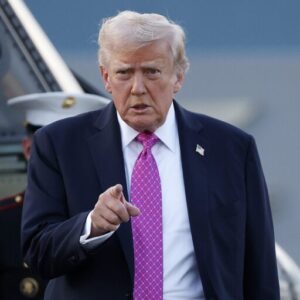
Donald Trump’s latest economic pitch dropped with the same force as many of his past announcements — blunt, bold, and designed to grab every headline in the room. This time, the proposal revolves around a nationwide “American Dividend,” a payout of at least $2,000 per qualifying adult, funded entirely through tariff revenue. In Trump’s words, this plan is meant to ensure that foreign exporters “pay their fair share,” with the collected money funneled straight back into the pockets of American households…..CONTINUE READING IN BELOW
According to Trump, the system would be straightforward at its core: tax imported goods, collect the revenue, and redistribute a chunk of it to citizens who fall outside the high-earner brackets. The idea mirrors the logic of resource-based revenue sharing seen in places like Alaska, where oil profits translate into yearly dividend checks for residents. But this time, instead of oil fields paying out, the proposal hinges on America’s trade relationships and the steady inflow of tariff dollars.
Trump claims the approach would strengthen domestic industries by giving American manufacturers an advantage over foreign competitors. He also argues the plan is a way to reward families and workers directly, without the usual bureaucracy and political back-and-forth that accompany social programs. On Truth Social, he defended tariffs as a winning formula, calling critics “fools” and pointing to what he describes as strong markets and low inflation during his previous years in office.
Still, the big problem is the missing details. There’s no official framework outlining how the dividends would be calculated, how eligibility would be verified, or how frequently payments would be distributed. Nothing concrete exists yet — no draft legislation, no administrative outline, no operational guidelines. Analysts are watching closely for signs of whether the idea is intended as a serious, actionable policy or another political pitch designed to ignite enthusiasm among supporters.
Economists are split, not on the concept of cash payments, but on relying heavily on tariffs to fund them. Tariffs generate revenue, but they also raise the cost of imported goods, which can hit consumers directly at the checkout line. Tariffs operate like a tax hidden inside price tags, and experts caution that widespread tariffs risk increasing everyday costs for families unless carefully managed. Supporters argue that higher prices on imports could push consumers toward American-made products, potentially boosting jobs and local manufacturing — the kind of effect Trump often promises in his economic messaging.
Another concern is scale. To sustain repeated $2,000 payouts to tens of millions of eligible Americans, tariff revenue would need to reach unprecedented levels. Historically, tariffs have made up only a small fraction of federal income. For this plan to work reliably, the U.S. would need to dramatically increase tariffs on a wide range of foreign goods, potentially triggering retaliation from trading partners, including those who supply essential items to the U.S. market.
Then there’s the question of how the payments would actually reach the people. The administration would need a mechanism — possibly through tax filings, direct federal rebates, or a system similar to the stimulus payment infrastructure rolled out during the pandemic. Each option comes with challenges: income verification, fraud prevention, administrative cost, and timing delays. None of these logistics have been addressed yet.
Political feasibility is another matter. Even if Trump returns to the White House with strong congressional support, tariff-heavy policies often meet resistance from both sides of the aisle. Republicans traditionally support free trade, while Democrats often emphasize worker protections and targeted tax credits over sweeping national payouts. Turning the American Dividend into law would require navigating a complicated landscape of committee hearings, negotiations, and revisions.
For now, the proposal exists mostly as a broad vision — a headline-grabbing promise with big numbers and big implications. But it fits neatly into Trump’s larger economic narrative: America first, foreign competitors paying the bill, and direct payouts to everyday citizens as proof of loyalty to the working class.
Whether the plan becomes a historic new system or fades into the long list of political what-ifs will depend entirely on what comes next. The concept might appeal to voters eager for relief or reward, but without a concrete structure, it remains more of an idea than a reality. Economists, policymakers, and millions of taxpayers are waiting to see whether Trump’s team will release a full blueprint — something detailed enough to answer the core questions hovering over every bold proposal: How would it work? Who would qualify? And how soon could people expect to see the money?
Until those questions are answered, the American Dividend stands as a striking piece of political messaging — a promise aimed at reshaping the country’s revenue system by turning foreign imports into cash in citizens’ pockets, and a reminder that big ideas always sound simple before the hard math begins.