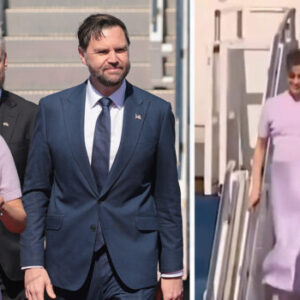
A recent leak of private photographs taken during the holiday period at Mar-a-Lago has reignited concerns about the treatment of Barron Trump, underscoring long-standing questions about privacy for children and young adults connected to public power. While the images themselves were not officially released, their circulation was enough to trigger backlash and internal consequences for those involved.
Barron, now 19, has largely remained outside the public eye despite growing up in one of the most scrutinized political families in the United States. Unlike many children of public figures, he has not been a fixture of media narratives or social commentary. That distance has been intentional, carefully maintained over the years by his mother, Melania Trump, who has consistently drawn firm lines between public office and private family life.
According to a source speaking with Radar Online, Melania responded swiftly after learning of the leak. She reportedly made it clear that such violations would not be tolerated and that individuals responsible could face immediate consequences, including potential banning from the private club. The message, the source said, was unequivocal: Barron’s privacy is not open for negotiation.
This reaction aligns with a broader pattern. During her time as first lady and in the years since, Melania has intervened repeatedly to limit references to her son’s personal life, resisting attempts to turn him into a public talking point. While political families often find their private moments blurred into public consumption, she has consistently rejected that inevitability when it comes to her child.
A political source echoed this protective stance in comments to People, noting that Melania remains vigilant in ensuring Barron is neither harassed nor subjected to bullying or unwanted attention. The emphasis, the source said, has always been on safeguarding normalcy rather than courting visibility.
Beyond the immediate individuals involved, the incident highlights a larger issue. Public curiosity does not nullify personal dignity, and proximity to power does not grant license to intrude. Even in highly politicized environments, private spaces remain private—or should.
In this case, the response was direct and instructive. Boundaries were crossed, and consequences followed. The message was not framed as political, retaliatory, or performative, but as parental and protective. Amid an era where private lives are increasingly treated as public property, the stance was clear: privacy still matters, and some lines are not meant to be crossed.