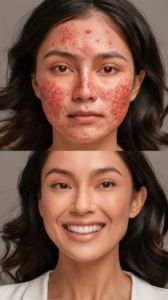
Acne can be frustrating, but with the right care and consistency, it’s possible to heal and manage it. Here are some tips to help you address and treat acne effectively:
1. Cleanse Gently
Use a gentle cleanser: Opt for a sulfate-free, non-comedogenic cleanser to remove dirt, oil, and makeup without irritating your skin.
Avoid over-cleansing: Cleansing too often can strip your skin of natural oils, leading to more oil production and potentially worsening acne.
Cleanse twice a day—morning and night—and always after sweating (e.g., after exercise).
2. Exfoliate with Caution
Exfoliate once or twice a week: Use a gentle exfoliant with salicylic acid (BHA) or glycolic acid (AHA) to help remove dead skin cells that can clog pores.
Avoid physical scrubs: Harsh scrubs can irritate acne-prone skin and cause more breakouts.
Don’t over-exfoliate: Excessive exfoliation can inflame acne and cause more irritation.
3. Spot Treatments for Active Breakouts
Use benzoyl peroxide or salicylic acid spot treatments directly on blemishes to reduce inflammation and help kill acne-causing bacteria.
Tea tree oil is a natural alternative with antibacterial properties that may help calm inflamed acne.
4. Hydrate Your Skin
Keep your skin moisturized with non-comedogenic (won’t clog pores) moisturizers. Acne treatments can be drying, so hydration is important to maintain your skin’s balance.
Use oil-free or gel-based moisturizers if you have oily or acne-prone skin.
5. Avoid Touching Your Face
Your hands carry bacteria and oils, which can contribute to acne. Try not to touch your face, and avoid picking or squeezing pimples, as this can spread bacteria and worsen scarring.
6. Use Non-Comedogenic Makeup
Opt for makeup labeled as non-comedogenic, meaning it’s formulated not to clog pores.
Be sure to remove all makeup at the end of the day to avoid buildup.
7. Be Mindful of Your Diet
Reduce dairy and high-glycemic foods: Some studies suggest that dairy and foods high in sugar or refined carbs can worsen acne for some people.
Incorporate more omega-3 fatty acids, found in foods like salmon, flaxseeds, and walnuts, which can help reduce inflammation.
Drink plenty of water to flush out toxins and stay hydrated.
8. Use Retinoids at Night
Retinoids (like adapalene) can help with acne by speeding up skin cell turnover, preventing clogged pores, and reducing inflammation.
Start with a lower-strength retinoid and gradually increase to avoid irritation. Apply it in the evening, as retinoids can increase sun sensitivity.
9. Be Patient
Acne treatments can take time to show results, often 4-6 weeks or longer, so try to stick with your routine and avoid switching products too frequently.
Avoid trying too many treatments at once, as this can irritate your skin and worsen acne.
10. Consider Seeing a Dermatologist
If over-the-counter products aren’t working, a dermatologist can help customize a treatment plan for you, which may include prescription medications like topical antibiotics, oral contraceptives, oral antibiotics, or stronger retinoids.
A dermatologist can also help with acne scars through treatments like chemical peels, microneedling, or laser therapy.
Additional Tips:
Sleep on clean pillowcases: Change pillowcases regularly to reduce the transfer of oils and bacteria to your face.
Stress management: High stress levels can trigger or worsen acne, so try to incorporate stress-reducing activities like yoga, meditation, or regular exercise.
By consistently following a balanced skincare routine, being gentle with your skin, and incorporating the right treatments, you can effectively manage and reduce acne over time.